La Vie de Bohème
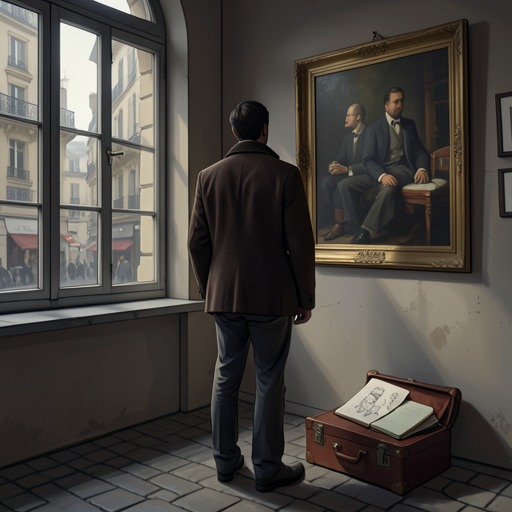
Of Human BondageLa Vie de Bohème is the novel that turns Philip Carey’s dissatisfaction with an accountancy office into a vision of artistic life in Paris. Found by chance among the books in the vicarage study, it gives him not merely a story to enjoy but a romantic model for the future: its starving artists, makeshift homes, and precarious loves seem to promise beauty and freedom. The book’s influence helps propel Philip toward Paris, while the gap between its alluring picture and the hardship of actual life makes it a defining example of how art can shape desire by making deprivation look enchanting.
Discovery and Enchantment
Miss Wilkinson discovers the volume while rummaging through the Vicar’s study. It had been bought in a lot with something Mr. Carey wanted and had lain undiscovered for ten years. Its accidental reappearance places the book at a turning point: Philip has returned from Germany, refused Oxford, and is considering how to earn a living, but his prospects have not yet become a settled choice.
Philip is immediately captivated by Murger’s work, which the narration describes as fascinating, ill-written, and absurd. Its charm rests less on polished writing than on the world it conjures. Rodolphe and Mimi, Musette and Schaunard move through the gray streets of the Latin Quarter, lodging in one attic and then another, dressed in quaint Louis Philippe costumes and passing between tears and smiles. Philip responds to the mixture of hunger, squalor, love, and gaiety as if it had made hardship itself beautiful.
The narration distinguishes Philip’s enchantment from a more considered judgment. A reader who returns to the book with sounder judgment can see the vulgarity of its characters’ pleasures and minds, and question their worth as artists and people. Philip, however, is still inside the spell. That contrast establishes the book’s double function: it offers emotional force and imaginative possibility, yet its romantic treatment of deprivation can conceal what poverty and instability actually mean.
Paris as a Future
Miss Wilkinson recognizes how strongly the book has affected him and asks whether he wishes he were going to Paris instead of London. Philip replies that it is too late, but his answer belongs to a moment when Paris is still a wish rather than a practical plan. The novel has given that wish its atmosphere: the city appears as the setting where art, love, and unconventional life might converge.
The prospect becomes more consequential when Hayward urges Philip to leave office work and study art in Paris. Philip has been trying to find an escape from the misery of his present state, and La Vie de Bohème is one of the means by which he can imagine another existence. In his depressed moments, a few pages carry him back to the attics where Rodolphe and the others dance, love, and sing. The book therefore works not only as a model of bohemian life but as a private refuge from the ledger and the limitations of his current routine.
His response is sustained by other people’s encouragement and by his own hopes for his sketches and watercolours. Miss Wilkinson tells him he can live in Paris on eighty pounds a year and enthusiastically supports his artistic ambition. Yet the book’s romance does not erase Philip’s caution: he compares the advice to take risks with Hayward’s greater financial security, while his own fortune is limited. The imagined Paris of the novel makes artistic departure emotionally compelling; it cannot make the costs of that decision disappear.
A Romantic Ideal and Its Limits
The novel’s effect depends on its transformation of material hardship into aesthetic pleasure. Starvation becomes good-humoured, squalor picturesque, and sordid love romantic. The sequence of paired reversals shows why Philip is moved: conditions that might repel him in ordinary life become attractive when arranged as a literary world of costumes, affection, tears, and smiles. The book does not simply tell him that bohemian life exists; it teaches him to see its privations through the promise of beauty.
That promise belongs to Philip’s stage of life rather than to an objective guarantee offered by Paris. He has not yet tested the reality behind the book’s beguiling picture, and his eagerness to believe in artistic possibility exceeds the evidence that he can make a living as a painter. The narration’s later judgment of Murger’s characters supplies a counterweight to Philip’s initial rapture, exposing how an idealized literary image can encourage longing while withholding a sober account of its costs.
Narrative Significance
La Vie de Bohème links reading to action in Philip’s development. It gives shape to a desire he had already begun vaguely to entertain, then supplies an imaginative alternative whenever office life feels intolerable. Paris becomes more than a destination: through the book it signifies romance and beauty, and the possibility of remaking himself as an artist.
The object’s importance lies in this combination of genuine inspiration and distortion. Philip’s enthusiasm helps him take seriously a future that had once seemed closed, but the same enchantment makes precarious life appear graceful and manageable. By placing the book’s appeal beside the narrator’s more critical account of its characters, the novel presents literature as a force that can release ambition without guaranteeing that the dream it awakens will survive contact with ordinary hardship.